
2026
Praesidium Insurance
Benchmarking Report
Sexual Abuse and Molestation Liability

What carriers, brokers, and organizations need to know about the changing SML Insurance Market.
Sexual abuse and molestation liability (SML) insurance is becoming more complex, selective, and closely connected to an organization's abuse prevention practices.
Since 2022, Praesidium has benchmarked how insurance carriers approach SML coverage, underwriting expectations, and abuse prevention risk controls. In 2026, Praesidium expanded the research to examine the market from three perspectives:
-
Carriers underwriting SML risk;
-
Brokers and agents navigating placement; and
-
Consumer-serving organizations purchasing coverage.
The findings reveal a market experiencing pressure on rates, limits, and capacity alongside a significant evolution in underwriting.
The central shift: insurance providers increasingly want evidence that abuse prevention is operating in practice, not simply documented in policy.
KEY FINDINGS:
91%
of responding carriers expect underwriting requirements to increase over the next three years
Benchmarking Report: Sexual Abuse & Molestation Liability. https://bit.ly/SMLBenchmarking26

How is the sexual abuse and molestation insurance market changing?
The 2026 report expands the benchmark by bringing together perspectives from across the SML insurance process, providing a broader view of how current market conditions are being experienced by those providing, placing, and purchasing coverage.
-
89% observed higher SML Rates
-
81% observed lower available limits.
-
54% observed fewer carrier options for their clients.
Organizations reported similar experiences. More than half of responding insured organizations reported experiencing fewer coverage options, lower limits, fewer carriers willing to quote, and less willingness to negotiate when seeking SML coverage.
The result is a purchasing process that brokers describe as more rigorous and less predictable—requiring organizations to start earlier, provide more documentation, and more clearly demonstrate their risk controls.
80%
of responding carriers anticipate continued market hardening in some form
And carriers expect the pressure to continue.
In Praesidium's 2026 survey, 80% of responding carriers anticipate some form of continued SML market hardening over the next three years, up from 59% in 2024.
Broker and agent expectations tell a similar story: 76% expect higher rates, 58% expect fewer carrier options, and 55% expect lower limits.
-
76% expect higher rates;
-
58% expect fewer carrier options; and
-
55% expect lower limits.

92%
of broker/agent respondents have observed increasingly specific underwriting requirements related to abuse prevention

What SML insurance limits are carriers offering?
In 2026, 60% of responding carriers reported typical SML limits below $5 million. No responding carrier reported offering typical limits above $10 million, compared with 12% in Praesidium's 2024 survey.
Looking ahead, carrier expectations remain cautious:
-
67% anticipate decreasing SML limits over the next three years
-
Only 5% anticipate increasing limits
Carrier comments indicate that available limits may increasingly depend on the individual risk, including industry, venue, population served, loss experience, and the organization's risk controls.
For brokers and insured organizations, evaluating SML coverage therefore increasingly requires looking beyond whether coverage exists to how much coverage is available, where it sits in the insurance program, and what may erode or restrict those limits.
Are SML policies shifting from occurrence to claims-made coverage?
In 2022, only 15% of responding carriers reported offering claims-made policies. By 2024, that figure had increased to 35%.
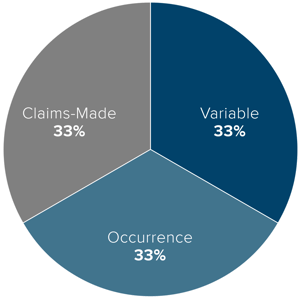
In 2026, carrier responses were evenly divided: approximately one-third reported claims-made offerings, one-third occurrence-based offerings, and one-third said the basis varies by line or risk.
And the market may continue moving.
Nearly half of responding carriers said they are considering remaining with or shifting primarily toward claims-made SML coverage during the next three years.
Carriers identified several factors behind those decisions, including long-tail claim activity associated with changes to statutes of limitations, the desire for greater visibility into loss development, social inflation, litigation funding, and characteristics of particular insured populations.
2026 SML Coverage Characteristics Offerings Basis
Why does occurrence vs. claims-made SML coverage matter?
An occurrence policy generally responds based on when covered conduct occurred, even if the resulting claim is made later.
A claims-made policy generally responds based on when a claim is first made against the insured and may also require reporting during a specified period. Retroactive dates and extended reporting periods can therefore become particularly important considerations.
The full report explores how carriers and brokers are seeing this shift and what organizations should understand as they evaluate their coverage.
Are defense costs reducing available SML insurance limits?
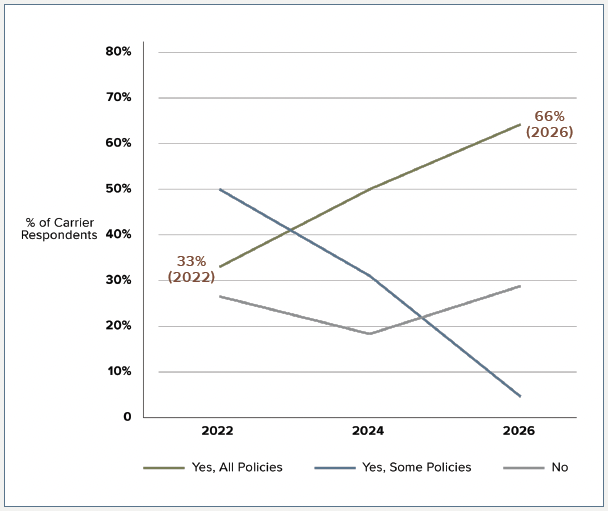
Praesidium's benchmarking data show a consistent increase in carriers reporting that defense costs are included within SML limits.
-
In 2022, 33% of responding carriers said defense costs were included within the limits of all SML policies.
-
In 2024, that increased to 50%
-
In 2026, it reached 66%
When defense costs are paid within the policy's liability limit, expenses associated with investigating and defending a claim may reduce the amount of the limit remaining for other covered loss.
For organizations and their insurance advisors, understanding whether defense costs sit inside or outside SML limits is therefore an important part of evaluating the actual protection provided by a policy, not simply the stated limit.
What abuse prevention practices do SML insurance carriers require?
85% of responding carriers report having defined underwriting requirements addressing abuse risk control practices that an organization must have in place to obtain SML coverage. Praesidium's research examined five interconnected areas of prevention:
Policies
85% of responding carriers have defined requirements for abuse prevention policies.
Screening
90% have defined requirements for employee and volunteer screening, and 100% at least consider background checks and reference protocols.
Training
75% report defined training requirements. While this is lower than 2024, training specifics are at least considered by every responding carrier with specific abuse prevention requirements.
Monitoring & Supervision
85% have defined requirements addressing how organizations monitor and supervise higher-risk situations.
Reporting & Responding
90% have defined requirements addressing how organizations respond to incidents and allegations, up from 81% in 2024.
But the more important finding is what happens when these practices are considered together.
No single prevention practice stands alone.
In 2026, carrier responses suggest that effective SML risk management is increasingly evaluated as a system of interconnected prevention practices—not a checklist of isolated requirements.
2026 Underwriting Expectations: Critical Prevention Systems
SML underwriting is moving from policies to proof of prevention.
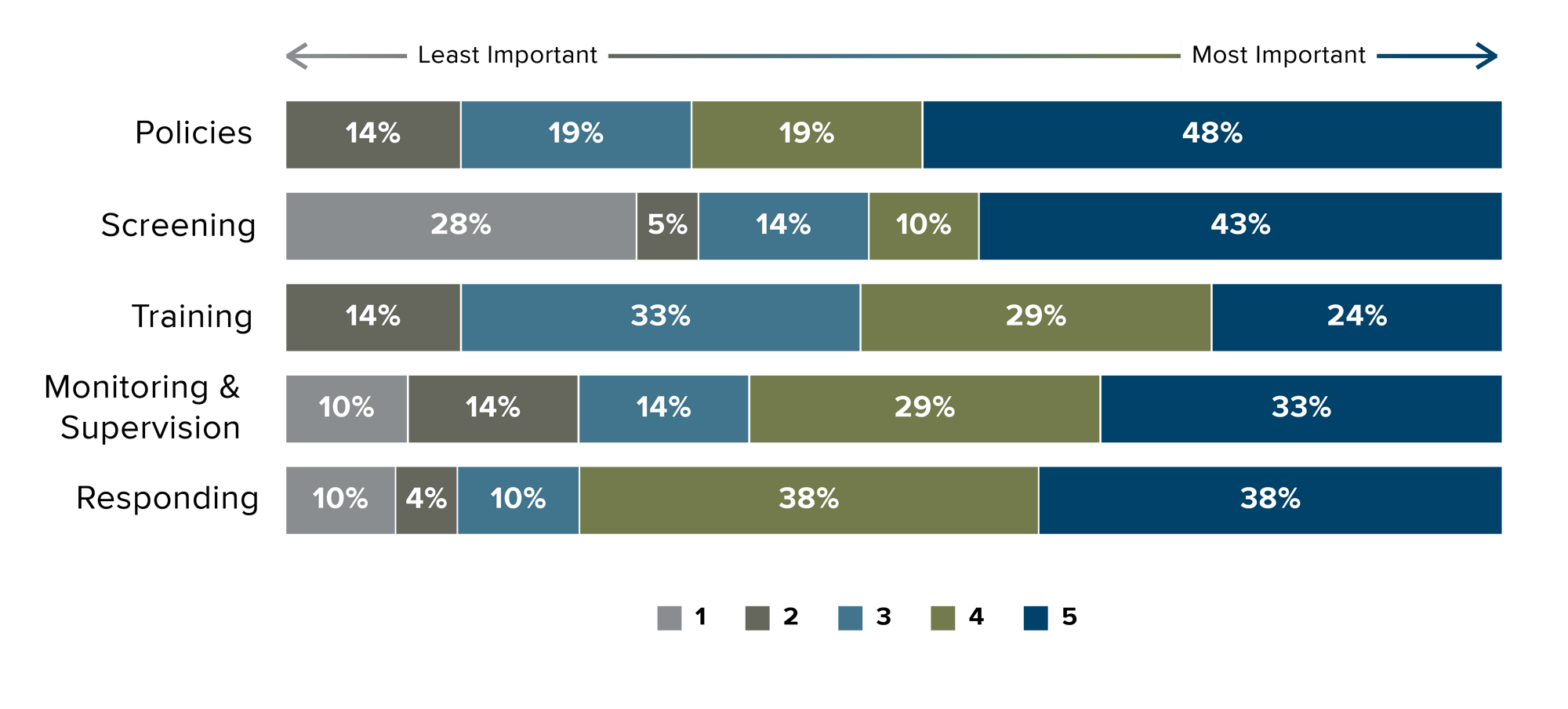
In 2022, carriers ranked written policies as the most important of five major prevention areas. By 2024, screening and supervision had moved to the top.
In 2026, no single prevention practice clearly dominates.
Instead, carrier responses point toward an increasingly systemic view of abuse prevention: policies, screening, training, monitoring and supervision, and reporting and responding work together as evidence of an organization's prevention maturity.
Broker and agent experiences reinforce that finding.
92% of responding brokers and agents have observed increasingly specific abuse-prevention underwriting requirements during the past three years.
Their responses identify several themes:
-
Proof over promises. Underwriters increasingly want evidence that controls and formal prevention practices are actually operating.
-
A deeper underwriting review. Claims history, organizational history, supplemental applications, and details about training, screening, and reporting are receiving greater scrutiny.
-
Implementation matters. Policies remain important, but insurers increasingly evaluate whether they connect to actual practices.
Risk context matters. Venue, litigation environment, claims activity, programs, populations served, and carrier appetite can still influence coverage decisions even when an organization has strong controls.
What should organizations do before their next SML insurance renewal?
Among responding organizations, 78% said their current insurer required information about abuse prevention or consumer/customer safety practices at their most recent renewal.
Broker and agent respondents recommend that organizations prepare earlier and build a stronger prevention story before renewal.
That includes being prepared to demonstrate:
-
Specific written abuse prevention policies and procedures
-
Employee and volunteer screening practices
-
Documented and ongoing training
-
Monitoring and supervision of higher-risk interactions
-
Clear reporting and response procedures
-
Claims and incident history
-
Corrective action following concerns or incidents
-
Leadership engagement and accountability
-
Risk assessments and continuous improvement
-
External validation where appropriate
The goal is not simply to assemble better paperwork for an insurance application.
It is to be able to demonstrate that abuse prevention is an active, organization-wide system that operates consistently throughout the year.

What should carriers and brokers know about SML risk in 2026?
Organizations are navigating a more technical purchasing process while carriers seek better evidence of risk quality. Brokers increasingly sit between those two realities—helping clients understand underwriting expectations and helping insurers understand the client's prevention story.
Praesidium's research suggests several areas of opportunity:
-
Start earlier. SML placement is increasingly difficult to treat as a routine renewal exercise.
-
Look beyond the application. Prevention maturity may be reflected in implementation, leadership involvement, incident response, corrective action, risk assessment, and ongoing measurement.
-
Help insureds understand coverage structure. Limits, sublimits, defense costs, occurrence versus claims-made coverage, excess availability, exclusions, and reporting requirements can materially change the protection an organization actually has.
-
Connect clients with prevention resources. Carriers and brokers already offer risk assessment, training, loss control, sample policies, consulting, crisis response, and other value-added resources, but Praesidium's findings indicate that utilization remains uneven.
The whole abuse prevention system matters.
Praesidium's 2026 research points toward a fundamental shift in SML underwriting: The question is no longer simply whether an organization has the right policies. The question is whether its prevention system works.
A policy cannot compensate for inconsistent supervision. Training has limited value if employees do not understand when or how to report a concern. Screening alone cannot protect consumers if warning signs are ignored after someone joins the organization.
Carriers increasingly want evidence that these practices work together—and that leadership can demonstrate consistent implementation, accountability, learning, and improvement.
A stronger SML submission is one outcome.
A stronger culture of safety is the greater one.
Download the 2026 Praesidium Insurance Benchmarking Report.
Get the complete research and analysis, including detailed findings from carriers, brokers and agents, and consumer-serving organizations.
The full report examines:
-
SML coverage availability and market conditions
-
Limits and coverage structure
-
Occurrence and claims-made policies
-
Defense costs and sublimits
-
Industry-specific coverage challenges
-
Underwriting requirements
-
Prevention practices evaluated by carriers
-
The future SML market outlook
-
What makes a strong SML submission
-
Accreditation as a validation signal
-
Value-added insurance services
-
Steps organizations can take to strengthen their prevention systems and prepare for renewal
See How the SML Market Has Evolved
Praesidium launched this benchmarking research in 2022 to better understand SML underwriting expectations, market trends, and loss-control measures. The research has continued to expand with each survey cycle, adding new perspectives and providing additional context for how the market is changing.

How Underwriting Expectations are Reshaping Abuse Prevention:
Insights from the 2026 Presidium Insurance Benchmarking Report
Coverage is becoming harder to secure across the SML market.
The 2026 SML Insurance Benchmarking Survey provides a clearer view of how carriers are responding. Drawing on data from brokers, agents, and organizations across industries, the findings point to a more constrained environment with lower limits, higher pricing, and fewer options.
At the same time, underwriting expectations are becoming clearer and more demanding. Coverage decisions are increasingly tied to how organizations demonstrate and communicate their prevention efforts.
This session examines what is changing and what it means for organizations working to secure and maintain SML coverage.

Ready to Strengthen Your
Prevention Systems?
Praesidium works with organizations across all industries to translate prevention standards into practical, effective safety systems. If you're evaluating your current approach or planning improvements, our team can help.
Where Policy Meets Practice in Prevention Systems: Insights from the 2026 Praesidium Report
The 2026 Praesidium Report reveals a consistent pattern across organizations. Most have policies in place, training completed, and expectations defined, yet gaps begin to surface when those systems are examined in practice. Across more than 800 organizations, policies are widely reported, but far fewer are followed consistently in day-to-day operations. At the same time, incident data shows risk is not disappearing. It is shifting into less visible environments and increasingly into digital interactions.
This raises a different question for leadership. If systems are in place, why does exposure continue? This session examines those findings and what they mean for how prevention systems function under real conditions.
Session Focus:
- Why policy presence does not equate to consistent practice
- How risk is shifting, including increases in digital and non-contact abuse
- What organizational data reveals about gaps in supervision and accountability
- Where leaders should focus to better identify and manage risk